
Leveraging Location Data for Targeted Selection: How FLO® Utilizes dataplor’s POI Data to Enrich its EV Charging Coverage

Case Studies

Leveraging Location Data for Targeted Selection: How FLO® Utilizes dataplor’s POI Data to Enrich its EV Charging Coverage

Geoff Michener
 Oct 01, 2024  •  8 min read

Background of FLO® and Their Use of dataplor’s Data

FLO, a leading electric vehicle (EV) charging network operating across North America, is dedicated to revolutionizing the way drivers access and utilize EV chargers. To achieve this, FLO is on a mission to build predictive models that anticipate EV charger utilization patterns, optimizing the availability and placement of chargers to meet demand. Julien Lebrun, FLO’s Network Planning Lead, and his team are refining their data strategy to support this goal. 

Why dataplor?

Julien and his team identified a critical challenge with FLO’s existing data source. Many Points of Interest (POIs) were either outdated or incorrectly placed. This inconsistency presented some difficulties, particularly in bilingual regions where both French and English are prevalent, as variations in language usage often led to discrepancies in data interpretation and categorization. Moreover, the FLO’s data was updated annually, only updated its data annually, which meant that some POIs had been closed for years, rendering the data almost unusable for a company that relies on precision and up-to-date information.

Having previous experience with dataplor (a leading provider of global location intelligence) from a former role where he conducted market analysis for geospatial technologies, Julien decided to explore dataplor’s offerings. His familiarity with dataplor’s capabilities, coupled with a pressing need for more comprehensive, accurate, and fresh data, led him to work with dataplor.

What Differentiated dataplor from the Previous Provider?

FLO’s decision to transition to dataplor was influenced by several key factors:

  1. Data Coverage: dataplor offered a substantially larger dataset of points of interest (POIs), providing FLO with a more complete understanding of potential locations for EV chargers. In benchmark areas, dataplor delivered 65% more records, addressing FLO’s need for a more complete view of potential locations for EV chargers.This increased coverage enabled FLO to identify previously overlooked opportunities and make more informed decisions about charger placement.
  2. Data Consistency and Accuracy: dataplor’s data was more consistent and accurate, particularly in bilingual contexts. This helped reduce data duplication and confusion, improving the reliability of FLO’s models and analyses.
  3. Data Freshness: dataplor’s data was regularly updated, ensuring that FLO’s models and decisions were based on the most current information. This is crucial for a rapidly evolving market like electric vehicle charging.
  4. Data Quality: dataplor’s data met higher quality standards, reducing the need for extensive filtering and cleaning. This improved the accuracy and relevance of the data, leading to more reliable models and operational strategies.
  5. Licensing Flexibility: dataplor’s licensing model was more flexible, allowing FLO to scale their use of data across multiple teams and applications without additional costs. This provided FLO with greater flexibility and efficiency in their data-driven initiatives.

How FLO® Uses dataplor’s Data Internally

FLO leverages dataplor’s data in several innovative ways:

– Machine Learning Models: FLO integrates dataplor’s POI data to enhance its machine learning models that predict EV charger utilization. By incorporating rich attributes, FLO can better forecast where demand for EV chargers will be highest.

– Sales Team Development: FLO’s sales team uses dataplor’s categorized POI data to identify potential hosts for EV chargers. By generating targeted lists of addresses and businesses, the sales team can efficiently reach out to potential partners, ensuring that FLO’s chargers are strategically placed in high-demand locations.

– Strategic Planning: For FLO’s strategy team, dataplor’s data serves as a vital resource for enriching its EV charger network data. The team analyzes the distribution of EV chargers across North America and correlates this data with POI attributes to gain insights into optimal charger placements. For example, knowing how many chargers a business has in each state helps FLO better plan future installations and expansions.

Achievements with dataplor’s Data

FLO’s partnership with dataplor led to significant advancements in FLO’s EV charger deployment strategy. With access to comprehensive and accurate POI data, FLO not only improved its predictive models but also enhanced its ability to strategically place chargers in high-traffic, high-demand areas. This approach resulted in increased prediction accuracy and enabled FLO to better meet the needs of EV drivers across their operational regions.

Additionally, the enriched data allowed FLO to more effectively target potential partners and hosts for their chargers, expanding their network more efficiently and driving growth. By integrating dataplor’s data into their backend systems, FLO streamlined operations and reduced the time to market for new charger installations.

Future Plans for Innovation with dataplor

Looking forward, FLO expects to continue leveraging dataplor’s data. As they expand their network and optimize charger placements, the data provided by dataplor will likely play a crucial role in guiding strategic decisions. FLO plans to continue utilizing dataplor’s fresh data updates to refine their models and enhance their EV charger network further.

With a strong commitment to data quality and innovation, FLO is well-positioned to maintain its growth trajectory, utilizing dataplor’s invaluable contributions to drive informed decision-making and capitalize on market opportunities effectively.


By prioritizing data accuracy, comprehensiveness, and flexibility, FLO’s reliance on dataplor has transformed its approach to market development and expansion in the EV charging industry.

FLO® is a registered trademark of Services FLO Inc. 

Join us on October 17th at the SDSC Conference in New York, to hear from FLO’s Network Planning Lead, Julien Lebrun and dataplor’s Head of Real Estate Solutions, Christina Virosteck.

Get the full story

Subscribe for the latest on location intelligence, places data, and the trends behind better business decisions.

Subscribe

European Tourism Is Booming: How Travel Trends Are Fueling Business Growth Across the Continent

Blog

European Tourism Is Booming: How Travel Trends Are Fueling Business Growth Across the Continent

Geoff Michener
 Jul 25, 2024  •  5 min read

After several dispiriting years of pandemic-related travel restrictions, tourism in Europe is back in full swing and booming more than ever this summer. With the revival of this important economic sector, local businesses in tourism-focused industries such as dining and hotels are experiencing significant growth. The European Travel Commission estimates that tourists will contribute a record €800 billion to Europe’s economy this year—a 37 percent increase over pre-pandemic levels.

While the surge in visitors is not without controversy for the countries hosting them, the influx of tourists is undeniably revitalizing the tourism sector in ever-popular destinations such as London, Paris, and Rome, as well as emerging hotspots in southern and eastern Europe. 

This raises the question: what does the economic boom look like on the ground? By analyzing our Point-of-Interest (POI) data, we’ve uncovered trends in business growth across the region, particularly in Paris. The city is currently welcoming athletes, their families, and fans from around the world for this year’s Summer Olympic Games. 

Regional Trends To Watch

The highest growth percentages in the total number of business locations since 2023 paint an interesting and dynamic picture of recovery. Which regions ended up at the top of the lists? For our analysis, we categorized European nations as follows:

  • Northern Europe: Norway, Sweden, Denmark, Finland, Iceland, United Kingdom, Ireland
  • Western Europe: Austria, Belgium, France, Germany, Liechtenstein, Luxembourg, Monaco, Netherlands, Switzerland
  • Southern Europe: Andorra, Italy, Malta, Portugal, San Marino, Spain, Vatican City
  • Eastern Europe: Belarus, Bulgaria, Czech Republic, Hungary, Moldova, Poland, Slovakia, Ukraine
  • Southeastern Europe: Albania, Bosnia and Herzegovina, Bulgaria, Croatia, Greece, Kosovo, Montenegro, North Macedonia, Romania, Serbia, Slovenia

Across Europe, three regions lead in the growth of new restaurant and bar openings: Western Europe, Eastern Europe, and Southeastern Europe. This surge likely reflects tourists’ desire for diverse culinary experiences while traveling abroad. These same three regions also top the list for new bar openings, highlighting their vibrant nightlife and social scenes, which attract both locals and tourists.

In the travel sector, including hotels and tourism agencies, the most significant growth has occurred in Western Europe, Southern Europe, and Southeastern Europe, demonstrating a strong rebound in the hospitality industry. The influx of tourists to these regions has also driven the highest growth in transportation, underscoring the need for efficient and expanded transit options for visitors. 

As for shopping, new retail businesses have flourished in Western Europe, Southeastern Europe, and Southern Europe, driven by increased tourist spending. The entertainment and recreation sector has experienced the highest growth in Western Europe, Southern Europe, and the Nordics, reflecting a higher demand for a variety of leisure activities in those areas.

Hot-Off-the-Press Country Trends

What does the data tell us about the tourism recovery landscape at the country level and its impact on local economies? Let’s examine the growth of tourism-focused businesses across various European nations.

Bar and Dining Infographic

If you’re curious about the latest trends in the European dining and bar scenes, Serbia, Italy, and the Netherlands are leading in new restaurant openings, followed closely by Ukraine, Germany, and France. Serbia, Italy, and the Netherlands are at the top for new bar openings, with Belgium, Ukraine, and France seeing significant growth in places to enjoy a drink with friends and locals. 

As expected, the enormously popular tourist destinations like Italy, France, and Greece are at the forefront of travel-related business growth. Italy and Serbia lead in the transportation sector’s growth, followed by Belgium, the Netherlands, and Greece.

Retail business growth has been most notable in Serbia, the Netherlands, and Italy, followed by France and Germany, where tourists’ shopping habits are undeniably contributing to the sector’s expansion. Finland, the Netherlands, and France lead in entertainment and recreation business growth, with Italy and Serbia also seeing increases. These countries, already popular with tourists, are enhancing their appeal by offering a wide range of recreational activities to tourists.

Where to Find the Most Bars and Restaurants

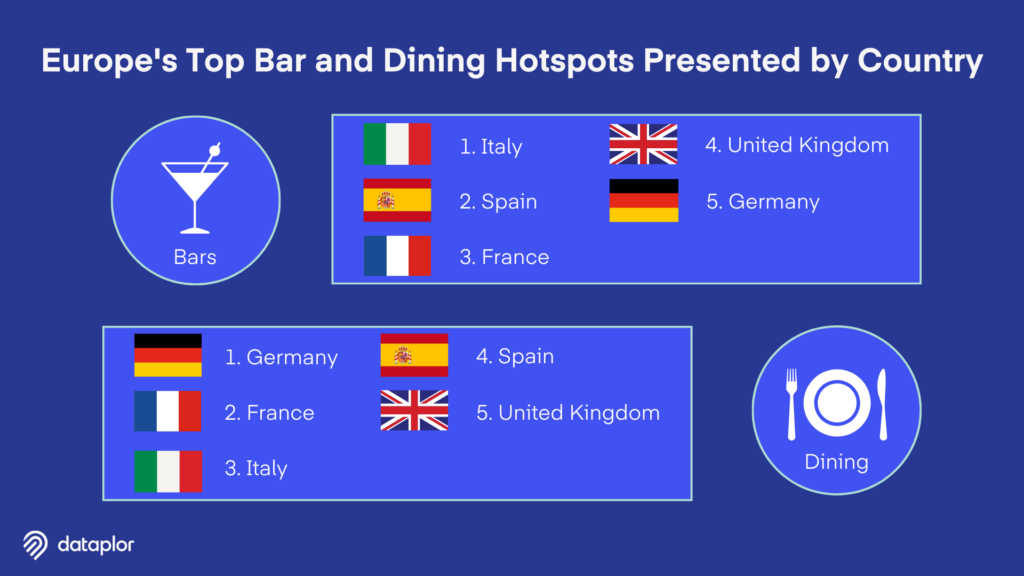
For travelers seeking the most diverse and vibrant bar scenes in Europe, Italy, Spain, and France are top destinations for raising a glass, followed closely by the United Kingdom and Germany. If dining out is a top priority while on vacation, Germany, France, and Italy offer the most restaurant options, while Spain and the United Kingdom are next in offering visitors a rich array of culinary options.

Spotlight on Paris

Paris is in full hosting mode for the 2024 Summer Olympics, which is already having a significant impact on tourism-related sectors.

Industry Growth Infographic

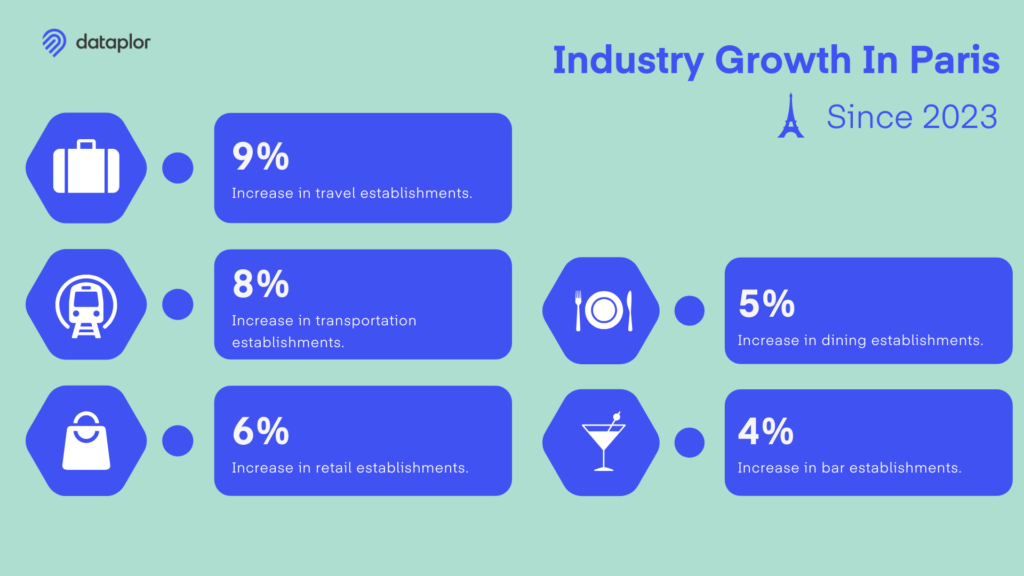
Out of all the travel POIs, which pinpoint businesses such as lodging and travel agencies, 9 percent have opened since 2023, marking the highest number of recent openings in any category. The transportation sector has also seen substantial growth, with 7 percent of new openings in relation to other categories, reflecting preparations for the influx of visitors for the Games. Dining establishments have seen 5 percent of openings relative to other areas, and the number of bars has accounted for 4 percent of new openings, giving visitors more options for meals, aperitifs, or late-night celebrations of Olympic victories. Finally, Paris’s retail footprint accounted for 6 percent of openings, as the city strives to meet tourists’ insatiable appetite for shopping in the City of Light.

A Glimpse into the Future

As the data clearly shows, the resurgence of European travel is fueling significant growth across multiple tourism-related business sectors. The increase in business locations, particularly in dining, bars, travel, transportation, retail, and entertainment and recreation, highlights these industries’ ability to bounce back and thrive after extremely challenging times.

Paris, with its preparations for the Summer Olympics now coming to fruition, provides an excellent example of how major events like the Games can accelerate growth in tourism-adjacent businesses. These trends not only reflect the current state of the tourism industry in Europe, but also indicate a future where travel and tourism continue to play a vital role in Europe’s economic landscape. As the tourism sector evolves, paying attention to these trends will become increasingly important, providing crucial insights into where people are headed and how businesses can adapt to meet their needs.

Get the full story

Subscribe for the latest on location intelligence, places data, and the trends behind better business decisions.

Subscribe
dataplor Secures $10.6M Series A Funding to Advance Global Leadership in Location Data

Blog

dataplor Secures $10.6M Series A Funding to Advance Global Leadership in Location Data

Geoff Michener
 Apr 18, 2024  •  5 min read

By Geoff Michener, CEO and founder, dataplor

Today marks a significant milestone in dataplor’s journey—we have successfully closed our $10.6M Series A funding round led by Spark Capital, a pivotal step as we continue our mission to deliver the most accurate Point of Interest (POI) data available, empowering enterprises to make better decisions and drive growth across global markets.

From the outset, dataplor was built on the belief that accurate, reliable, and privacy-first location data was missing from the global market. We aim to help companies uncover hidden opportunities and build stronger relationships within the worldwide business community.  Estimates show bad data costs the market nearly $7 trillion annually. Many providers claim to offer comprehensive global coverage but lack the expertise and verification measures to deliver highly accurate datasets. This problem is particularly pronounced in developing countries, where up to 70% to 90% of international location data contains inaccuracies.

Building the infrastructure to curate an accurate, global dataset

Even from the earliest days of our first Minimally Viable Product (MVP), we’ve seen the value that international POI data can unlock for businesses, and our approach of including humans in the loop has been validated each step of the way. Building a robust product and team was critical in our early growth. We also found our sweet spot of using both technology—AI algorithms for gathering data, de-duping it, finding errors, etc.—and expert human validators as the key to building accurate data at scale. Creating the infrastructure for scaling this global product could not have been done without the collective effort of the dataplor team’s diverse talents and dedication. As we continued to see interest from customers and drew support from early investors, we grew our business. Now, we’ve curated a dataset that encompasses over 300 million POI records across more than 200 countries and territories and counting. 

Our unique approach ensures that our datasets are highly accurate, complete, and continually updated in real time. We have developed an industry-leading quality control system that combines hundreds of sources, reviewed by our in-house data scientists and analysts. dataplor is used by strategic decision-makers in retail, mapping, consumer packaged goods, and quick-service restaurants, among other growing industries. We count dozens of Fortune 500 brands among our customer base, and we envision this funding carrying our work to new heights.

Maximizing humans in the loop

Uncovering data and intelligence is a profoundly human exercise. However, empowering the hundreds of dedicated individuals contributing to our data verification efforts requires blending their expertise with the right technology. As dataplor continues to grow, our commitment to delivering superior global data remains unshaken. We achieve this by bringing together a world-class team of data specialists. Our team is dedicated to consistently providing exceptional products and experiences, driven by their expertise and adaptability, to meet the needs of our valued customers. The dataplor team’s collaborative mindset and innovation have been crucial in blending advanced AI with human insight to refine our data accuracy. As we expand, we aim to continue recruiting smart and innovative individuals who can contribute to our growth.

We invested early in using machine learning to efficiently process billions of data points, map patterns, and break down information so it’s most useful for our customer base. Our deep learning technology gives global location intelligence to any brand worldwide, opening a new perspective to assessing brand performance and new opportunities. Our funding empowers us to continue investments in new technologies that will scale the work of our human intelligence gatherers and analysts.

Future growth with a privacy-first approach

We’ve taken pride in launching and scaling a platform with efficiency. But even as we scale, our commitment to a privacy-first approach remains unwavering. In an era where data privacy is increasingly under the spotlight, we believe it is not only possible but essential to collect and utilize data responsibly. 

At dataplor, we don’t utilize any personally identifiable information (PII) in our data collection practices. Our datasets are sourced through direct contact with a place, or through publicly available data, without using PII or engaging in individual tracking through phones, apps, or other devices. This approach aligns with our ethos and also benefits our customers by ensuring they don’t have any legal or regulatory challenges from using data that breaches privacy best practices.

A future of superior location intelligence

I’m thankful for the leadership of Alex Finkelstein at Spark Capital, Quest Venture Partners, Acronym Venture Capital, Circadian Ventures, Two Lanterns Venture Partners, APA Venture Partners, and ffVC for leading this round. This key milestone was only possible because of our team’s commitment and dynamism; I look forward to seeing the new challenges we take on together. 

With this new funding, we’re poised to explore new frontiers, tackle bigger challenges, and deliver even greater value to our customers. We’re thrilled about the new opportunities ahead.

Get the full story

Subscribe for the latest on location intelligence, places data, and the trends behind better business decisions.

Subscribe