

Blog
Unlocking competitive edge with customization and expansion: what we heard at NACS and why it matters


Retailers and brands today are navigating a more competitive and dynamic marketplace than ever before. The questions they’re asking: Where should we open next? How do we stack up against competitors? How can data drive smarter expansion? came through loud and clear at this year’s NACS conference.
These aren’t new topics to retail planning or location intelligence, and each of these themes points to the same truth: success depends on seeing your market clearly, understanding it deeply, and acting with confidence. Brands and retailers want to tell a better story with their data about the consumer journey, competitive presence, and market movement.
Competitive visibility isn’t optional anymore
Knowing your competitors exist isn’t enough, you need to see where they’re opening, closing, and gaining traction. Many data teams we speak to still rely on fragmented or outdated sources to understand market shifts. Without clear visibility, even the most sophisticated brands are left making educated guesses. The result? Missed opportunities or misguided investments in the wrong areas.
To solve this, companies are prioritizing data consistency and global coverage, building comprehensive views of their competitive landscape that combine location, performance, and context. When you can see both where competitors are and how their networks are performing, decisions become clearer and more confident.
Customization is the new must-have
Many attendees at NACS shared frustrations with rigid platforms that box them into predefined geographies and dashboards. Without flexibility, brands are forced to work around their technology rather than with it, which slows insight and stifles innovation. Each market behaves differently, and a static approach doesn’t capture those nuances.
To overcome this, companies are looking for products that allow for true customization, including the ability to define and monitor their own trade areas, visualize store networks the way they operate, and measure success on their own terms. That kind of adaptability gives teams ownership over how they see and use data.
Smarter market expansion starts with context
For many growing brands, site selection and expansion decisions are still made based on intuition rather than evidence. Choosing new locations without full market context can lead to costly missteps like a store that opens in an area with declining foot traffic, or a product placed where nearby businesses are closing. The consequences ripple through budgets, operations, and long-term growth.
The teams we spoke with are eager to change this; they want to move from guesswork to grounded strategy and understand not just where growth looks possible, but why. That means looking beyond the site itself to the surrounding ecosystem: business density, consumer activity, and local market momentum.
To make smarter decisions, companies are turning to data-driven site selection and market intelligence, layering location insights with trends and context. With this holistic view, expansion becomes strategic, not speculative.
From local insight to global impact
One of the most impactful conversations we had at NACS was with a professional responsible for product placement in small, independent retailers across emerging markets. Her challenge was scale: how do you find the right local shops when reliable data simply doesn’t exist?
That’s where Dataplor’s global coverage becomes essential.
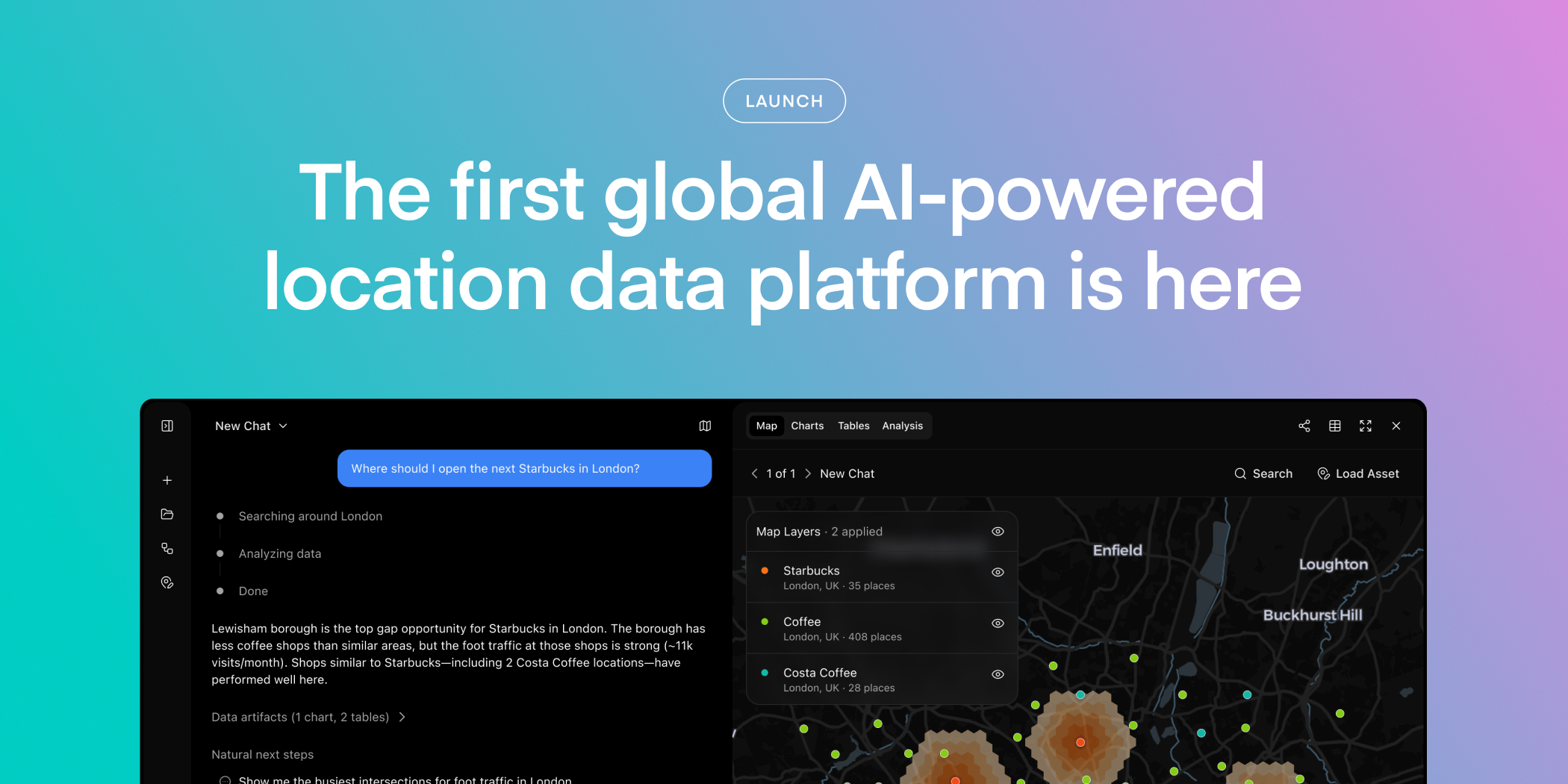
Dataplor’s global POI and mobility data empowers brands and retailers with a complete picture of their markets by showing where competitors are located, how frequently they open or close, and how consumers engage with those places. Users can create and track fully custom geographies, analyze performance by region, and visualize insights that align with their business goals. This helps teams evaluate potential markets with confidence, understand what is happening and why, and make faster, more focused, data-driven decisions.
As the conversations at NACS made clear, growth today depends on clarity not just collecting data, but connecting it to the questions that matter most. With the right visibility, flexibility, and context, brands can navigate change with confidence and turn information into meaningful action. If you’re ready for that action, we’d love to chat.
You might also like


Get the full story
Subscribe for the latest on location intelligence, places data, and the trends behind better business decisions.
Subscribe